Computer Science Research
Saint Louis University's Department of Computer Science faculty is engaged in cutting-edge research, both to advance fundamental algorithms and computing technologies, and to apply those technologies in innovative ways that improve people's lives and advance knowledge and understanding of our world.
Research Clusters
Computer Science Theory and Education
Our distinguished faculty are active scholars advancing computer science theory, publishing cutting-edge research in computational geometry, topology and algorithmic design in top venues. They are also committed to innovative, project-based education that prioritizes student engagement. This includes leveraging open-source initiatives, providing SLU students with practical, real-world collaboration opportunities on public codebases. Having developed and presented novel educational techniques and authored global textbooks, they ensure students receive a rigorous education grounded in theory and practical application.
- David Letscher
- Michael Goldwasser
- Daniel Shown: Open Source with SLU

Artificial intelligence and Machine Learning
Saint Louis University leads AI research, developing novel algorithms in machine learning, computer vision and computational linguistics with significant real-world impact. Our interdisciplinary focus applies ethical AI to complex problems in health care, urban planning and scientific discovery. Through rigorous research, SLU is shaping the next generation of AI leaders and technologies.
- Abby Stylianou's research
Bioinformatics
The Computer Science Department leads in bioinformatics and computational biology, utilizing advanced methods to analyze complex biological data. Research develops new algorithms for large-scale genomic, proteomic and imaging analysis, focusing on personalized medicine and disease modeling. This highly collaborative, interdisciplinary work connects computer science with biology, medicine and public health. Ultimately, SLU's efforts yield critical discoveries and tools that improve human health.
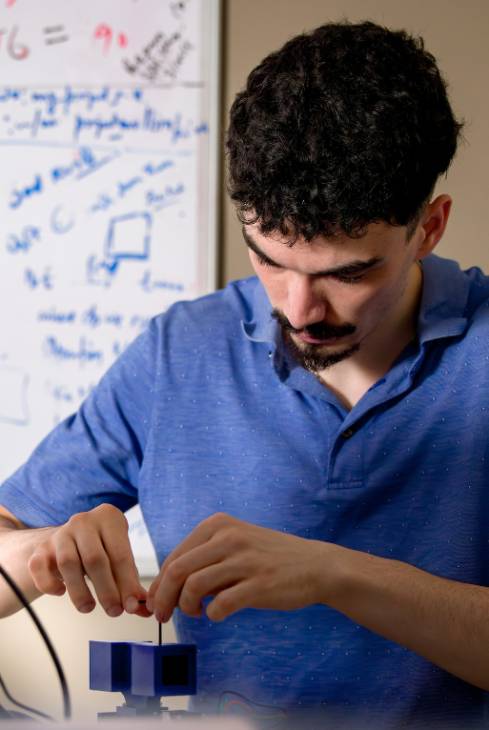
Computer Vision and Robotic Sensors
Saint Louis University integrates AI and advanced robotics to create sophisticated autonomous systems. Key research focuses on 3D reconstruction via structure-from-motion using aerial photography. This work supports intelligent autonomous systems, utilizing deep reinforcement learning and computer vision for robust, real-time object tracking. Connecting this to geospatial intelligence, the research provides significant societal benefits in disaster relief, precision agriculture and autonomous vehicle safety.
- Hadi Akbarpour's AIRLab
- Nan Cen's research
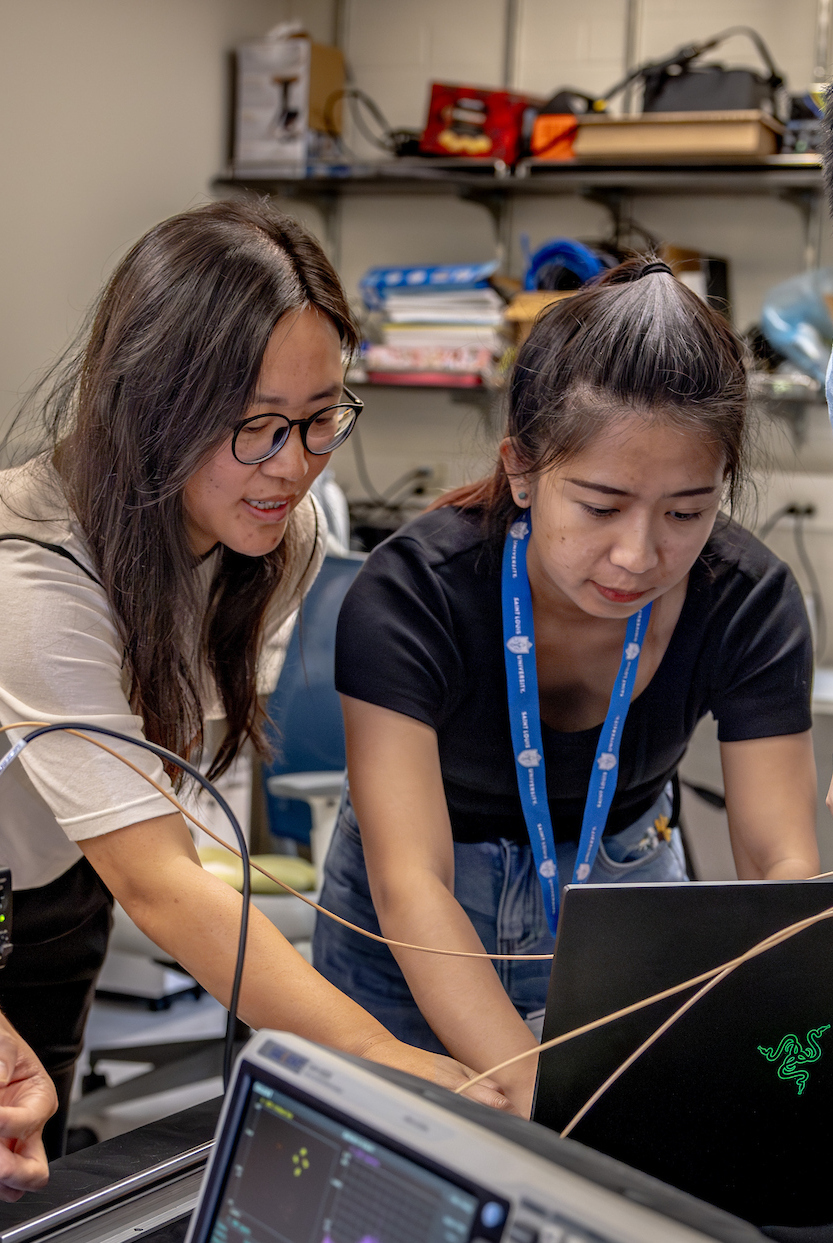
Cyber-physical Systems
Research at Saint Louis University transforms cyber-physical systems (CPS) into practical tools by merging real-time computational intelligence with autonomous hardware like drones and ground vehicles. These investigators develop integrated platforms that use advanced sensors to create "digital twins," allowing for the precise mapping and monitoring of urban infrastructure and agricultural health.

High-performance Computing
High-performance computing (HPC) at Saint Louis University acts allows computer science faculty and students to move from theoretical concepts to large-scale, real-world applications. By providing the infrastructure to handle trillions of calculations per second, SLU’s HPC resources — specifically the Libra cluster — directly advance several core CS research areas.
- Ted Ahn's BioHPC Lab
- Qinglei Cao's Omni Computing Lab

Computer Security
Researchers at Saint Louis University are redesigning how the internet functions to make digital connections faster, more reliable and more energy-efficient. One major focus involves creating "intelligent" networks that use software to automatically fix themselves and manage heavy data traffic, similar to a smart traffic system for the web. Another project aims to build resilient communication tools that can stay online during natural disasters by allowing devices to talk directly to one another even when traditional cell towers are down.
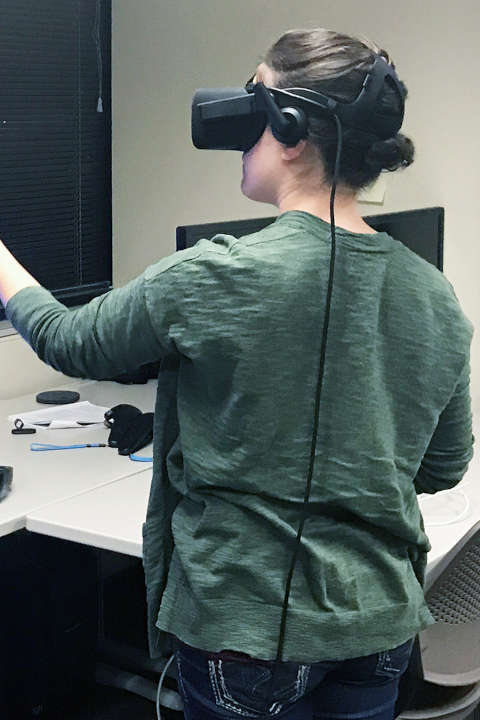
Virtual Reality and Computer Graphics
Research at Saint Louis University in computer graphics and virtual reality focuses on creating immersive digital environments that enhance human capabilities through physically-based simulations and human augmentation. Investigators develop non-invasive diagnostic tools, such as using thermal imaging and computer vision to monitor respiratory patterns and detect early signs of disease without physical contact.
- Min Choi's GXRLab and research
- Jason Fritt's research